
Study reveals Hot Molecular Cores Persist Throughout Massive Protostar Evolution
Recently, MENG Dezhao, a PhD student at the Xinjiang Astronomical Observatory of the Chinese Academy of Sciences, under the guidance of Prof.LIU Tie and his supervisor Prof.Jarken Esimbek, conducted a systematic study of a sample of protoclusters using data from the ALMA-QUARKS survey. The study reveals that massive hot cores can appear at various evolutionary stages of high-mass protostars, challenging the previous view that hot cores represent only a short-lived evolutionary phase.
The results have been published in The Astrophysical Journal.
Using high-resolution and high-sensitivity 1.3 mm continuum and molecular line observations from ALMA, the researchers identified 125 hot molecular fragments. These fragments represent the substructures of hot cores revealed at high spatial resolution. According to their associations with CO molecular outflows and H II regions, the fragments were classified into four types: narrow-angle outflows, wide-angle outflows, no outflow, and shell-like structures surrounding HII regions (see Figure 1).
This remarkable diversity indicates that hot cores are not confined to a specific evolutionary stage; rather, they persist throughout the formation of high-mass stars and exhibit a variety of morphologies (see Figure 2).
By analyzing hot molecular lines and hydrogen recombination lines, the researchers investigated the spatial relationship between hot molecular fragments and ultra-compact H II regions. They found a clear spatial separation between the two and found that the sequential formation of massive stars within young protoclusters is unlikely to be directly triggered by feedback from pre-existing H II regions. This result provides new observational constraints on the role of feedback mechanisms in high-mass star formation.
Based on a large statistical sample, this study reveals the diverse evolutionary manifestations of hot cores, revises and enriches our understanding of the evolutionary stages of high-mass star formation, and has important implications for the development and refinement of theoretical models of massive star formation.
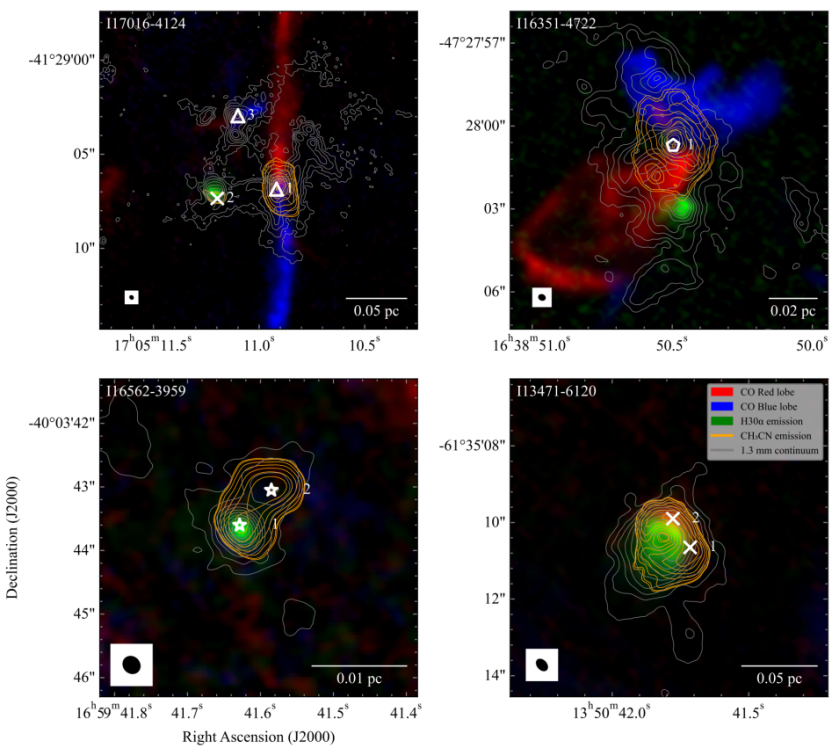
Figure 1. Representative examples of the four different types of hot molecular fragments (HMFs).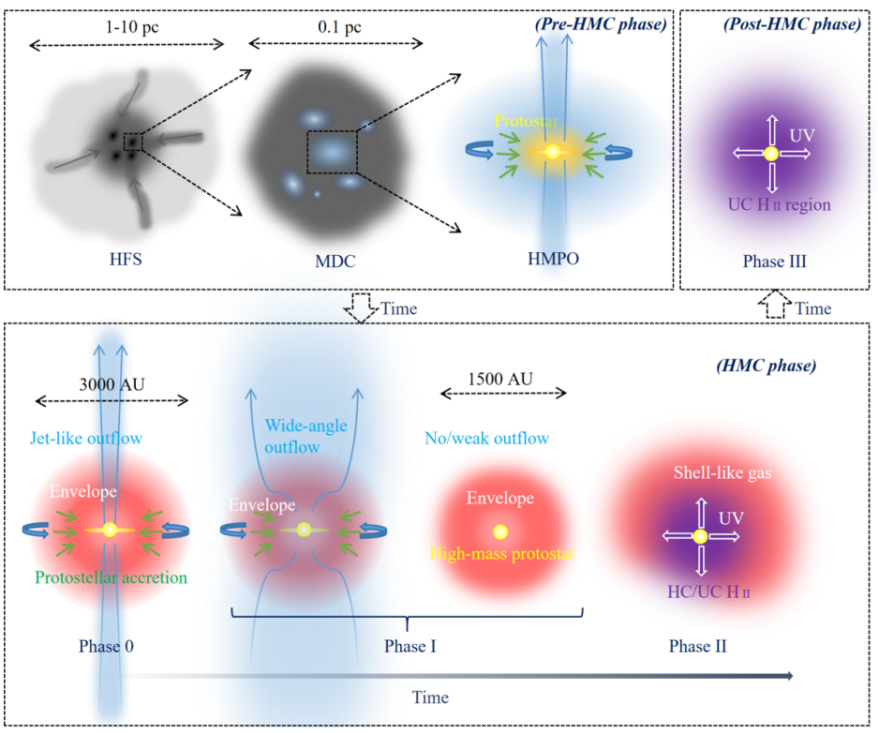
Figure 2. Schematic diagram of the evolution of high-mass protostars.
Attachment Download:





