
Seminar on Automated Observation and Related Technologies for the 1.93-meter Muztagh-Ata Telescope
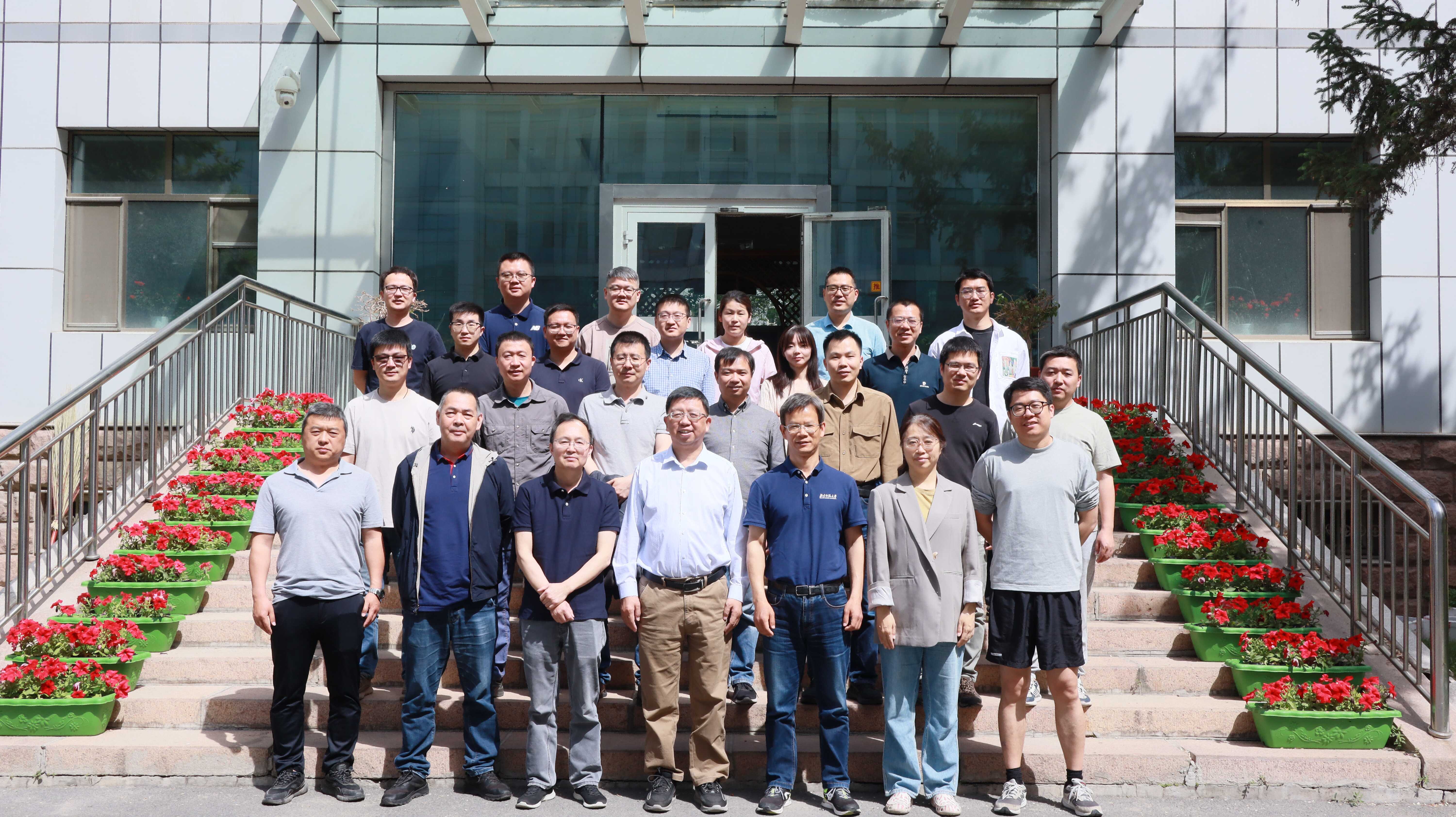
From May 9 to 11, 2025, the Seminar on Automated Observation and Related Technologies for the Muztagh-Ata 1.93-meter telescope was successfully hosted by the Xinjiang Astronomical Observatory (XAO).
The event brought together experts and scholars from Beijing Normal University, the National Astronomical Observatories of China (NAOC), the Nanjing Institute of Astronomical Optics & Technology (NIAOT), and Xinjiang University to engage in in-depth exchanges and collaborative discussions on the automated development of optical telescopes at high-altitude sites.
Experts at the seminar agreed that, given the extreme environmental conditions of plateau sites and the growing demand for rapid response in time-domain astronomy, promoting remote and automated observation for plateau telescopes has become an inevitable trend. There is an urgent need to establish an operational system characterized by high efficiency, low risk, and strong stability. With the rapid development of time-domain astronomy, many scientific topics—such as gravitational waves, gamma-ray bursts, and supernova explosions—require stringent timing and rapid response in follow-up observations. These demands are creating an urgent need for transformation and upgrading in observation modes.
During the seminar, experts from NIAOT systematically introduced the overall design, control system architecture, and the ongoing development of the Observation Control System (OCS) for the 1.93-meter Muztagh-Ata Optical Telescope. They emphasized that as one of China’s 2-meter-class optical telescopes deployed in a high-altitude region, the level of remote automation achieved by the 1.93-meter telescope will directly impact the scientific capabilities and sustainable development potential of the entire plateau astronomical observation platform.
In addition, several experts from NAOC delivered thematic reports, sharing technical implementation pathways—such as remote fault diagnosis mechanisms, all-weather environmental sensing systems, autonomous scheduling strategies, and network communication guarantees—based on their years of experience in operating automated telescopes. They also proposed system integration solutions that could serve as valuable references for the Muztagh-Ata Telescope.
The participants expressed their commitment to jointly tackling key technologies in remote automation, steadily advancing China’s high-altitude astronomical observation facilities toward modernization, intelligence, and intensive development.
Attachment Download:





